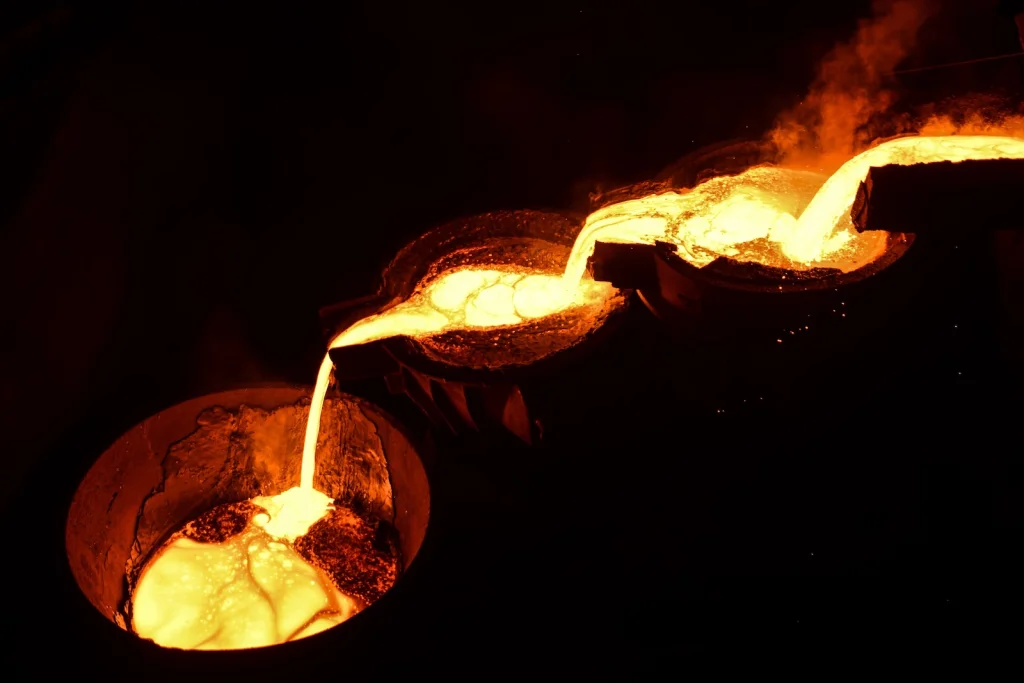

Industrial ceramics, also known as engineering ceramics or advanced ceramics, combine the superpowers of exceptional mechanical, thermal, chemical strength as well as an ability to resist wear that make them essential in today’s ever-evolving world. These materials are critical across a wide range of manufacturing processes—many more than you might think.rnrnWhen you consider ceramics, traditional pottery or decorative items might come to mind. However, industrial ceramics are engineered to a much higher standard and are specifically designed to solve engineering challenges, ranging from smelting to car brakes.rnrnThe primary materials used in industrial ceramics include oxides, nitrides, carbides, and certain composite materials, making them ideal for environments where reliability and performance are critical for safety and longevity and compared to other materials, industrial ceramics offer a unique set of advantages, including heat resistance, hardness, and resistance to wear and corrosion.rnu003ch2u003eThese benefits make industrial ceramics indispensable across a wide range of applications, including:u003c/h2u003ernu003colu003ern tu003cliu003eu003cstrongu003eThermal Applications:u003c/strongu003e Industrial ceramics are essential in applications requiring high-temperature materials due to Their resistance to high temperatures and lightweight nature provide reliable performance in demanding conditions., such as temperature measurement, molten metal handling, heat treatment, ceramic manufacturing, power generation, and glass production.u003c/liu003ern tu003cliu003eu003cstrongu003eElectrical Industry:u003c/strongu003e Ceramics are key components across the electrical industry, from fuse bodies to substrates for modern computer chips. Applications include temperature measurement, power distribution, heating, lighting, electrical insulation, medical equipment (scanners), electronics, and solar. Ceramics’ ability to form complex shapes, excellent electrical insulation, and low dielectric loss make them indispensable.u003c/liu003ern tu003cliu003eu003cstrongu003eMechanical Applications:u003c/strongu003e Their resistance to wear and high temperatures means industrial ceramics are ideal for thermo/mechanical applications. Applications include pumps, mining, medical implants, general engineering (slides, liners, mixers, rollers, dies), paper industry, and textiles. Benefits include dimensional stability, wear resistance, precision manufacturing, high surface quality, and hardness.u003c/liu003ern tu003cliu003eu003cstrongu003eChemical-Resistant Materials Applications:u003c/strongu003e Ceramics have proven highly effective in handling solid, liquid, and gaseous substances that adversely affect other materials. Applications include oil u0026amp; gas, chemicals, water treatment, medical, automotive, scientific, and mining industries. Benefits include resistance to chemical attack, non-reactivity, biocompatibility, dimensional stability, wear resistance, and high surface quality.u003c/liu003ern tu003cliu003eu003cstrongu003eOptical Applications:u003c/strongu003e Quartz glass offers extraordinary optical transmissivity for ultraviolet light. Its low coefficient of thermal expansion (CTE) enables it to withstand very high operating temperatures. No other industrial glass material can match quartz glass for UV-light transparency. Applications include space technology, UV-quality quartz glass components, high-temperature applications, prisms, and beam splitters. Benefits include low CTE, a broad operating temperature range, UV-quality glass, high-temperature shock resistance, pure material quality, and low fluorescence.u003c/liu003ernu003c/olu003ernu003ch2u003eIndustrial Ceramics: A Superhero Materialu003c/h2u003ernThe properties of industrial ceramics, compared to materials such as metals and rubbers, mean they can provide a significant improvement on manufacturing efficiency, product quality and longevity. Their hardness and resistance to wear has the added benefit of reducing maintenance costs, while their thermal stability and corrosion resistance allows them to be used in extreme conditions where other materials may fail.rnrnIndustrial ceramics truly are a superhero material, playing a crucial role in driving modern manufacturing and engineering—shaping a sustainable future and empowering industries to thrive.rnrnFor more detailed information on industrial ceramics and their applications, visit u003ca href=u0022http://www.anderman.com/u0022u003ewww.anderman.comu003c/au003e.rnrnu003cstrongu003eu003ca href=u0022https://www.linkedin.com/in/gary-hateley-55896732/overlay/about-this-profile/u0022u003eGary Hateleyu003c/au003eu003c/strongu003ernrnDirector at Anderman u0026amp; Company
Industrial Ceramics: The Superhero Material